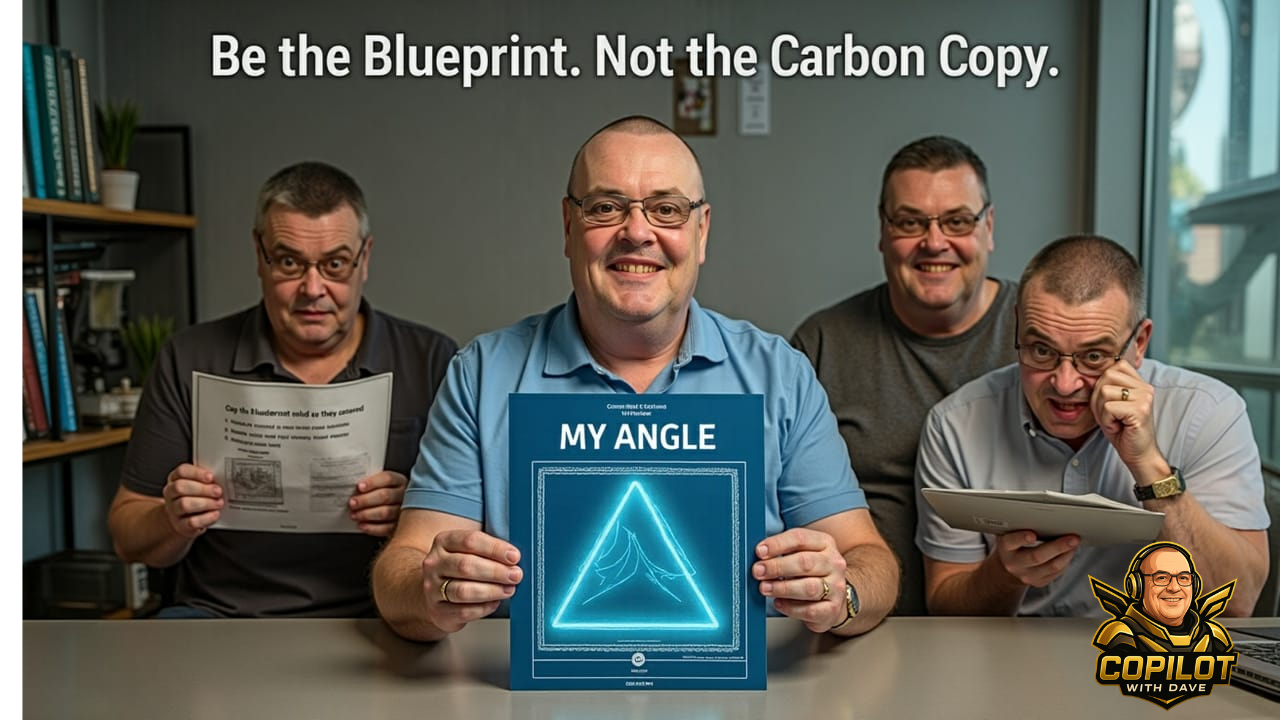
Introduction
Funnel copying is common in affiliate marketing. When someone posts a big win, dozens of marketers try to replicate the exact funnel, believing identical tactics will produce identical results. Many then wonder why their returns are tiny compared with the original case study.
This piece explains why direct replication often fails, how to spot copycat behavior, and what practical steps will help you build original funnels that perform. Expect tactical guidance you can apply to ads, landing pages, creative, and testing workflows.
Why copying funnels fails
The myth of one size fits all
A funnel that worked for one creator rarely works exactly the same for another. Different audiences, timing, budgets, ad placements, and offer familiarity all shape performance. Copying a funnel assumes those variables are identical — and they almost never are.
Audience context matters more than you might think. A hook that stops people scrolling for one niche can be ignored in another. The original creator may have built trust over time or used a media buy strategy that’s invisible from the outside.
Cognitive and market reasons copycats underperform
Humans respond to novelty, authenticity, and perceived credibility. When you replicate a funnel, the novelty is gone. The audience sees a familiar message from an unfamiliar messenger. That mismatch reduces attention and trust.
Competition also plays a role. If multiple affiliates run the same creative, ad fatigue sets in faster. Auction dynamics raise costs. Small differences in creative timing or audience segmentation can cause large changes in return on ad spend.
The false security of exact replication
Copying offers a false sense of low-risk action: follow the steps, expect the result. That mindset discourages critical thinking. Marketers who copy instead of understanding end up with brittle campaigns that break as soon as platform dynamics shift.
Replicating without understanding prevents you from troubleshooting. When a funnel underperforms, the copier has little insight into which variable to change. That leads to random tweaks instead of systematic optimization.
Recognizing copycat behavior
Common affiliate clown moves
There are predictable behaviors among copycats: swipe the hook, reword the headline, paste the same email sequence, or reuse creative assets. These moves often look like effort, but they lack strategic intent.
Another common error is using someone else’s creative identity — images or likeness — without permission. That risks takedowns and damages credibility.
Red flags in your funnel and creative
Signs you’re copying: your open rates and CTRs are far below benchmarks; your CPA is rising with each replication; audiences across multiple campaigns react apathetically. If you rely primarily on other people’s scripts, your messaging will sound generic and interchangeable.
Short ad lifespans also indicate a lack of originality. When ads die quickly, it’s often because they’re not distinct enough to hold attention.
Legal and reputational risks of blatant copying
Using another marketer’s creative, photos, or written sequences can trigger copyright claims and platform enforcement. More problematic is the reputational harm when audiences recognize mimicry — it erodes long-term trust.
There are real consequences: ad accounts suspended, affiliate relationships damaged, and an audience that stops engaging with your brand. Avoid shortcuts that create long-term liabilities.
Principles that actually convert
Study winners with purpose
Analyze successful funnels to understand why they worked. Break them down into components: hook, story, offer, proof, and call to action. Ask targeted questions: what problem does the offer solve? What prior belief did the funnel change? Which social proof sets expectations?
Take notes on structure rather than copying language. That produces lessons you can adapt.
Remix instead of replicate
Remixing means taking structural insights and applying them with your own creative twist. Keep the hypothesis but change the execution. For example, if a “pain to pleasure” storytelling arc worked, test that arc with your own imagery, voice, and customer anecdotes.
Small creative differences can produce outsized gains when they align with your audience.
Use your unique voice and perspective
Your voice is a conversion asset. Your experience, tone, and point of view create differentiation that builds trust. Use those elements intentionally in headlines, body copy, and creative sequences.
Authenticity is increasingly rewarded. Audiences prefer a familiar, consistent voice over a perfectly optimized imitation.
The role of novelty and curiosity in conversion
Curiosity-driven hooks, surprising claims, or unusual formats increase clickthrough. The goal is to interrupt scrolling long enough to earn a micro-commitment — a click or a watch. Novelty does not mean misleading; it means framing the offer in a way that reveals value gradually.
Short, provocative lines often perform better than long explanatory copy for initial ads. Save detailed explanations for landing pages and email sequences.
Creating original funnels
Research and reverse engineering without copying
Reverse engineering begins with pattern recognition. Map out funnel journeys you see in the wild: what ad delivered traffic, what landing page followed, what the upsell sequence looked like. Record the mechanics without transcribing content.
Then overlay your own audience data. Which patterns fit your buyer persona? Which mechanics are feasible with your resources?
Adapting hooks, headlines and offers to your audience
A hook must match both product and audience mindset. Test variations: curiosity hooks, benefit hooks, fear-of-missing-out hooks. Use language your audience uses in forums, comments, and reviews.
Offer structures can shift too. Maybe the original used a time-limited discount; your audience responds better to lead magnets or value-first trials. Align the mechanics to what moves your market.
Designing modular funnels for rapid iteration
Create funnels in modular blocks: ad creative, landing page, checkout offer, follow-up sequence. Swap one module at a time to isolate impact. This speeds learning and reduces wasted spend.
Use templates for common paths but ensure each module can be independently iterated.
Examples of remixing a winning funnel
If a competitor used a testimonial-driven ad with a demo video, consider a short user-generated clip highlighting a single metric, paired with an ultra-short headline. Same function, different form.
If the winning funnel used scarcity pricing, try educational content that frames scarcity differently — maybe limited availability of coaching slots rather than a price cut.
Writing blind copy that drives clicks
What blind copy is and why it works
Blind copy withholds full context to create curiosity. It hints at value without revealing it, which entices people to click to satisfy their curiosity. The balance: enough information to be relevant, not so much that the curiosity is eliminated.
Blind copy works when it aligns with a believable promise and a clear next step. It’s not deception; it’s strategic withholding.
Techniques to create intrigue without confusing
Use concrete details alongside omission. For example: “How she cut onboarding time by 72% with one change” suggests specificity and creates a question. Avoid vagueness that feels empty.
Pair blind copy with a clear visual or subheadline that confirms relevance once the user lands. This reduces bounce rates.
Quick templates and swipeable patterns to adapt
Templates are useful starting points:
– “I thought X was impossible until I tried Y.”
– “Why most Z fail at X (and what worked instead).”
– “You won’t believe how X reduced Y.”
Customize these with niche-specific terms and a unique twist. Keep iterations small and measurable.
Testing, measuring and iterating
Key metrics to monitor for affiliate funnels
Track CTR, landing page conversion rate, cost per lead, cost per acquisition, and return on ad spend. Also monitor micro-metrics like engagement rate on ads and open rates on follow-up emails.
These metrics tell a story about where friction exists.
A/B testing workflow for headlines, hooks and creatives
Start with a hypothesis, create two clear variants, and run them long enough to reach statistical relevance. Change one element at a time — headline, image, or CTA — to attribute impact.
Document results and iterate. If a change wins, re-run tests to confirm across different audience segments.
When to scale and when to kill a funnel
Scale when key metrics consistently hit targets and unit economics make sense. Kill when incremental testing fails to improve conversion rates and spend exceeds acceptable acquisition costs.
Set hard thresholds before testing to avoid sunk-cost bias.
Legal and ethical boundaries
Respecting intellectual property and likeness rights
Do not use someone else’s creative or face without permission. Copyright and personality rights are enforceable. Purchase stock assets or create original visuals to avoid risk.
When borrowing concepts, transform them significantly and add your own content.
How to borrow ideas without becoming a carbon copy
Borrow structure, not wording. Take inspiration from a sequence and replace the voice, imagery, and proof with assets that belong to you. Cite sources when appropriate and be transparent about partnerships.
This approach reduces legal risk and builds trust.
Building a brand that audiences want to follow
Consistency, originality, and respectful behavior build a brand over time. People follow authenticity and clear value. Avoid short-sighted mimicry; invest in messaging that reflects who you are and what you actually deliver.
Long-term followers convert at higher rates.
Conclusion and practical action plan
Rapid checklist to move from copycat to blueprint
– Map the funnel mechanics, not the words.
– Create modular assets to test independently.
– Use your voice and proprietary proof.
– Employ blind copy that teases value.
– Track core metrics and iterate based on data.
– Respect IP and likeness rights.
Next steps for sustainable growth and originality
Start with one funnel and run disciplined tests. Replace a copied headline with three original variants and measure. Invest time in understanding your audience’s language. Over time, this produces funnels that scale without chasing someone else’s shadow.
Originality wins attention. Use structure as a guideline, not a script.